

Carl Paulse
Insights and Articles
Guides
Step-by-step answers to the questions real estate finance teams ask us most.
- How to Trace a Portfolio Variance to the Buildings Behind It
- How to Write Variance Commentary Investors Trust
- How to Automate Yardi or MRI Reporting Without Replacing Yardi
- How to Scale Portfolio Reporting Without Adding Headcount
- How to Build Executive Reporting That Answers the Board’s Next Question
- How to Get Real Value From AI in Real Estate Finance
- How to Get a Real Estate Finance Team to Adopt New Technology
Carl Paulse
Insights and Articles
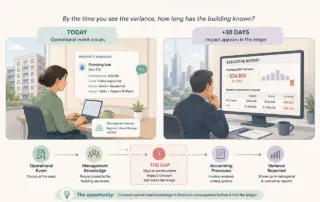
By the time you see the variance, how long has the building known?
The best explanation of performance doesn't stop at "why did this happen." It connects what the numbers are telling you with what your people already knew.
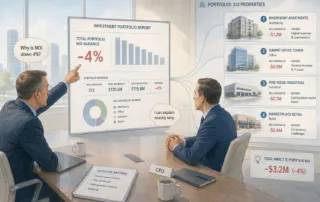
See the variance. Find the assets. Understand why.
A CEO or CFO managing 300 buildings cannot personally know every property the way they might have when they managed 20. Nor should they have to. But they still need access to that understanding when it matters.

What Two Years of Hesitation Taught Me About Trust
Existing clients had seen firsthand how we conducted ourselves, how we responded when challenges arose, and how we supported them after the contract was signed. That made subsequent project decisions easier.A new client has none of that experience.

Have we changed LinkedIn? And by “we,” I mean vendors like me.
Has LinkedIn changed, or have we, the vendors, changed it (for better or worse).
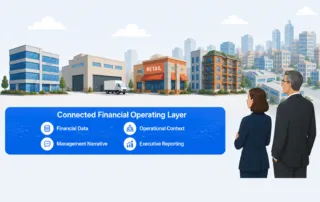
How Commercial Real Estate Teams Build Capacity
Last week we demonstrated our financial performance platform to a finance team. Everyone was looking at the same workflow, but solving different problems.
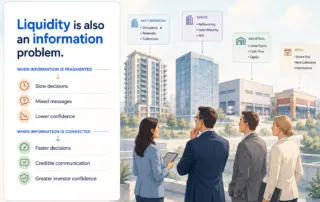
Liquidity Is Also an Information Problem
Trusted reporting ecosystems cannot create liquidity - but they can protect it.
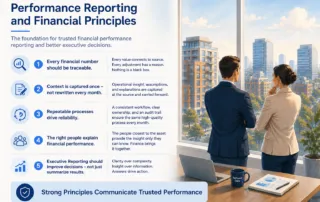
Operating Principles for CRE Finance
Technology evolves quickly, but whether you're evaluating AI, analytics, or reporting software - the principles that underpin finance remain remarkably consistent.

The Importance of Executive Reporting
If information becomes more connected rather than more abundant, can we derive value without complexity?

Connecting Numbers and Narrative in Commercial Real Estate
The real estate industry is extraordinarily good at acquiring assets and managing risk. What it hasn't been able to do is turn the performance of those assets into a clear, trusted, investor-grade story.

People Don’t Buy Technology. They Buy Relief.
Technology only creates value when it solves a real problem without creating new ones.
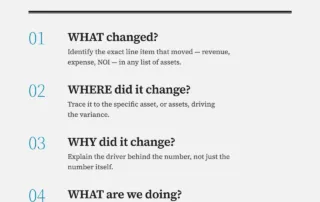
5 Questions to Understand Every Real Estate Financial Variance
The five questions below aren't hard to ask. They're hard to answer consistently...
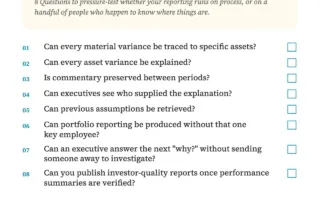
How Scalable is Your Portfolio Reporting Process
8 questions to pressure test your reporting process.
By the time you see the variance, how long has the building known?
The best explanation of performance doesn't stop at "why did this happen." It connects what the numbers are telling you with what your people already knew.
See the variance. Find the assets. Understand why.
A CEO or CFO managing 300 buildings cannot personally know every property the way they might have when they managed 20. Nor should they have to. But they still need access to that understanding when it matters.
What Two Years of Hesitation Taught Me About Trust
Existing clients had seen firsthand how we conducted ourselves, how we responded when challenges arose, and how we supported them after the contract was signed. That made subsequent project decisions easier.A new client has none of that experience.
Have we changed LinkedIn? And by “we,” I mean vendors like me.
Has LinkedIn changed, or have we, the vendors, changed it (for better or worse).
How Commercial Real Estate Teams Build Capacity
Last week we demonstrated our financial performance platform to a finance team. Everyone was looking at the same workflow, but solving different problems.
Liquidity Is Also an Information Problem
Trusted reporting ecosystems cannot create liquidity - but they can protect it.


